
Most conversations about AI for business in Nigeria default to the same image: a chatbot answering customer questions on WhatsApp. That picture is accurate, but it is incomplete.
A newer, less discussed shift is already underway. Analysts increasingly call it physical AI, systems that perceive, reason, and act on real-world operations, not just digital conversations. Logistics, agriculture, and manufacturing are where this shift is becoming visible first. These industries run on physical constraints a chatbot cannot touch.
Two Nigerian companies make this shift concrete. Kobo360 applies AI to freight logistics. Releaf applies it to agricultural processing. Neither company built a chatbot as its core product.
Logistics: Kobo360 and the Cost of Invisible Freight
Nigerian freight has a structural problem. Trucks return from deliveries empty. Routes get planned reactively, and cargo owners have limited visibility into where their freight actually is.
Kobo360, a Lagos-based digital logistics platform, built its business around fixing this specific problem. The platform applies predictive AI to match cargo owners with available truck drivers and optimizes routing in real time. Consequently, empty backhauls drop and fuel gets used more efficiently across the network.
This work has drawn serious institutional attention. The World Economic Forum has highlighted Kobo360 as an example of AI-driven logistics optimization across West Africa. Backing includes global investors such as Goldman Sachs. That level of backing does not happen for a cosmetic feature. It happens when a system solves a real, expensive, physical problem.
Structurally, this is infrastructure and data working together, not a conversational layer sitting on top of an unchanged process. The trucks still drive the same roads. What changed is the intelligence deciding which truck goes where, and when.
Agriculture: Releaf and the Limits of Manual Processing
Releaf operates in the oil palm value chain, where smallholder farmers have historically cracked palm nuts by hand. Shell thickness varies from nut to nut, which makes manual cracking slow and inconsistent at scale.
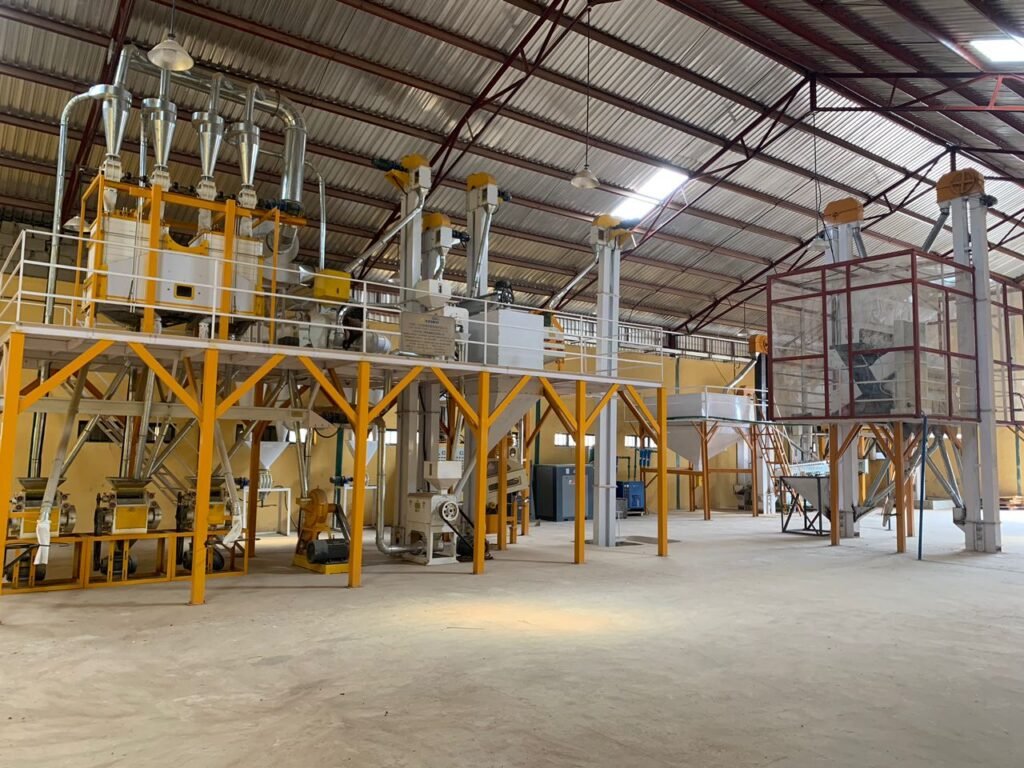
Releaf’s first move was not software. The company built Kraken, a patented industrial nutcracker capable of processing 500 tonnes of nuts per week at 95 percent efficiency. Physical infrastructure came before any algorithm.
The AI layer solves a different problem. Releaf uses a geospatial application called SITE to determine where new processing factories should go, based on crop yield and farmer density. That decision used to rely on intuition. Now it runs on data.
This combination matters. Hardware without intelligent placement data still wastes capacity. Intelligent data without physical processing capacity has nothing to act on. Releaf needed both pieces working together, not one convenient tool bolted onto an unchanged operation.
What These Two Case Studies Actually Prove
Neither Kobo360 nor Releaf started with a chatbot. Both started by identifying a specific physical bottleneck. They built the infrastructure to remove it, then layered AI on top to make that infrastructure smarter.
This pattern matters more broadly. Deloitte’s recent research on physical AI in Africa makes a useful point. The same conditions that make operations difficult across the continent, distance, infrastructure gaps, labor shortages, fragmented logistics, also create some of the clearest opportunities for intelligent systems to add real value.
Therefore, the lesson for a Lagos enterprise is not “add a chatbot.” It is closer to this: find where physical volume or distance is quietly costing money. Then ask what infrastructure and data would need to exist for AI to help.
Applying the Same Logic to Your Industry
Most businesses outside logistics and agriculture assume physical AI does not apply to them. That assumption usually does not hold up under a closer look.
A retail distributor managing inventory across multiple locations faces a version of Kobo360’s routing problem. A manufacturer deciding where to open a new facility faces a version of Releaf’s placement problem. The specific industry changes. The underlying pattern, physical operations generating data that a smarter system could act on, does not.
Even a service business generates a version of this data. Field technicians, delivery windows, and equipment maintenance schedules all produce patterns that go unused when nobody has built a system to read them.
Operationally, the businesses that benefit most from AI are rarely the ones chasing the newest chatbot feature. They are the ones willing to look closely at where their physical operations are already generating data nobody is using yet.
This is precisely why infrastructure sits at the front of any real AI readiness framework, not the back. A business cannot act on data its systems were never built to capture in the first place.

Book a Consultation with Circle HQ
Circle HQ evaluates infrastructure, data, and operational patterns before recommending any AI system. This applies whether a business runs on conversations, or on trucks, factories, and physical inventory.
Book a consultation with Circle HQ to find out where AI could apply inside your actual operations. Not just your customer service inbox.